28th December 2007
A report published today (Greater Expectations) shows that across Europe 64 per cent of people (out of a total of over 6,000 questioned in six countries) agree that community pharmacies should be developed as alternatives to doctors' clinics, so that they can have more choice in getting advice and treatment for common conditions. Support for extending pharmacy based health care is strongest in the UK and Poland. Over 75 per cent of people in both countries support the further development of pharmacies as alternatives to doctors' clinics.
In addition, 68 per cent of the UK public and 67 per cent of people in Poland believe that it would be a good thing if community pharmacists could prescribe a wide range of prescription only medicines without people having to go to a doctor. This compares with only 40 per cent of people supporting this in France and Germany.
Report author Professor David Taylor said today "traditionally, pharmacists have checked for safety and prescribing errors, supplied prescription items and treated minor conditions. But now there are important new opportunities for the direct provision of health services in community pharmacies, especially to support individuals who want to stay as healthy as they can as they go through adult life.
Modern pharmacy based care is about much more than helping people to recover from eating and drinking too much at New Year celebrations. Policy makers like Lord Darzi (who is currently reviewing the NHS) need to be aware of the growing value of community pharmacy as a clinical resource, and of the measures needed to extend its future contributions to delivering better health care."
Other findings from the new School of Pharmacy, University of London, report include:
Additional issues raised in the School of Pharmacy's analysis of European pharmaceutical care development are:
German health insurers have been notably innovative in this last area. The School of Pharmacy suggests that the UK could learn from their example, although the NHS is leading Europe in the development of pharmacy health care in the community. Professor Taylor commented "hospitals, primary care practices and community pharmacies are developing new ways of working to meet new patterns of health care demand. The pharmaceutical industry is also undergoing fundamental change.
For public health interests to be served well, all the providers of health services and products like medicines need to respect each others' contributions. Community pharmacists should be recognised as not only guardians of prescribing and medicines safety, but also as important health care providers. And British pharmacists should do all they can to support GPs, who are central to the success of the NHS".
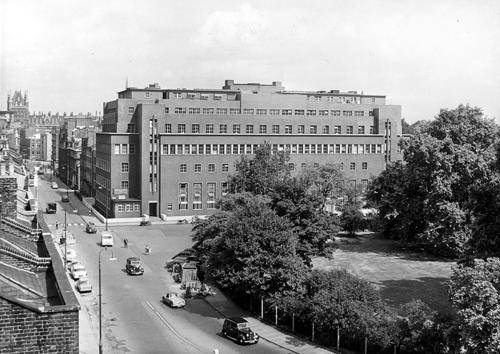
Professor Taylor addressed an event at the Royal Society on this topic and some photos can be seen below.
-----------------------------------------------------------------------------------------------------
Greater Expectations: Pharmacy Based Health Care – the Future for Europe? Price £15, obtainable from the Department of Practice and Policy, The School of Pharmacy, 29-39 Brunswick Square, London WC1N 1AX or see www.pharmacy.ac.uk for free copy.
Note to editors: for further information contact Professor David Taylor on 07970 139892, or at David.Taylor@pharmacy.ac.uk. Greater Expectations was researched by Dr Sara Garfield, Ms Jean Hawkins, Dr Jennifer Newbould, Dr Timothy Rennie and Professor David Taylor of the School of Pharmacy, University of London. The quantitative survey presented was commissioned from ICM Research.
This research was funded by an unconditional educational grant from Pfizer Worldwide Pharmaceuticals and directed by Professor Taylor, who is accountable for the analysis and conclusions offered.